Why is numeracy important?
"Good numeracy is the best protection against unemployment, low wages and poor health."
Andreas Schleicher
OECD
We use maths in every aspect of our lives at work and in practical everyday activities at home and beyond. We use maths when we go shopping or plan a holiday, decide on a mortgage or decorate a room. Good numeracy is essential to us as parents helping our children learn, as patients understanding health information, as citizens making sense of statistics and economic news. Decisions in life are so often based on numerical information; to make the best choices, we need to be numerate.

Numeracy and the individual
Numeracy in everyday life
We use numeracy every day in all areas of our lives. Our confidence and ability with numbers impacts us financially, socially, and professionally. It even affects our health and wellbeing.
Some examples of the ways we use maths every day include:
- Working out how many minutes until our train
- Increasing a recipe to serve extra guests
- Checking we've received the right change
- Working out how much to tip in a restaurant
- Setting and keeping to a budget
- Helping children with homework
- Managing our diet and nutrition
- Measuring medicine doses
- Making sense of statistics and graphs in the news
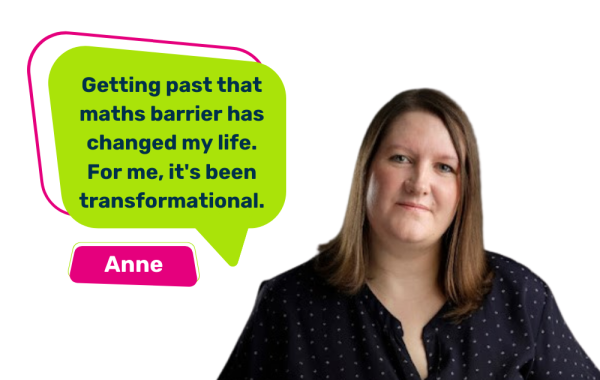
Poor numeracy can affect people’s confidence and self-esteem. Testimonials from our learners have demonstrated that improving numeracy directly contributes to growth in personal and social confidence.
Adult numeracy - what is the issue?
Why focus on adult numeracy?
Around half of UK adults only have the numeracy we'd expect of primary school children (Skills for Life report). We want to help these millions of adults to get on with numbers at work and in life.
While schools are vital to ensuring the younger generation build a positive relationship with numbers, the issue among adults often goes under the radar. We've shown that adults can - and do - improve their numeracy when given the right opportunities. Our ambition is for everyone to get the essential numeracy they need to get on in life.
Many adults aren't aware of the opportunities out there. Such as help from the National Numeracy Challenge, and access to free qualifications like Functional Skills Maths.

The growing need for numeracy
Our need for a good level of numeracy only increases as we get older.
When we start thinking about mortgages, the financial implications of borrowing money, interest rates and pensions it's essential that we're numerate enough to make informed decisions.
So many of the important decisions we must make as adults are based on numbers. This means that people who are not confident and capable with numbers are estimated to be worse off than those with good numeracy skills. A report in 2021 by Pro Bono Economics found that the average cost to individuals with poor numeracy could be nearly £1,600 a year.
The effects of poor numeracy
There is a lot of evidence linking low numeracy skills with poor outcomes. These are some of the key reasons why numeracy is important:
Employment
People with poor numeracy skills are more than twice as likely to face unemployment
![[field.image-text]](/sites/default/files/styles/scale_and_crop_600x350/public/2023-06/numeracy-employment-image.jpg?itok=GbN1rGWV)
Wages
Recent data by the OECD show a direct relationship between wage distribution and numeracy skills
![[field.image-text1]](/sites/default/files/styles/scale_and_crop_600x350/public/2023-06/numeracy-money.jpg?itok=2KhKzZnB)
Money
Good numeracy is linked to a range of positive financial behaviours including saving frequency and keeping up with bills
![[field.image-text2]](/sites/default/files/styles/scale_and_crop_600x350/public/2023-06/numeracy-bills.jpg?itok=sX0iveZW)
Health
In OECD and UK basic skills reports, the correlation between poor numeracy and poor health is clear. Data from the British Cohort Studies have shown that there is also a link between depression and poor numeracy
![[field.image-text]](/sites/default/files/styles/scale_and_crop_600x350/public/2023-06/numeracy-health.jpg?itok=E0zKPdpu)
Social, emotional and behavioural difficulties
Children with these problems are more likely to struggle with numeracy, even taking into account factors such as home background and general ability
![[field.image-text1]](/sites/default/files/styles/scale_and_crop_600x350/public/2023-06/numeracy-behaviour-difficulty.jpg?itok=zWBcOvuk)
School exclusions
Pupils beginning secondary school with very low numeracy skills are more likely to face exclusion
![[field.image-text2]](/sites/default/files/styles/scale_and_crop_600x350/public/2023-06/numeracy-exclusion-link.jpg?itok=eM6mj6zc)
Truancy
14-year-olds who have poor maths skills at 11 are more than twice as likely to play truant
![[field.image-text]](/sites/default/files/styles/scale_and_crop_600x350/public/2023-06/numeracy-truancy.jpg?itok=e5KGZHoV)
Crime
A quarter of young people in custody have a numeracy level below that expected of a 7-year-old. Similarly, 65% of adult prisoners have numeracy skills at or below the level expected of an 11-year-old
![[field.image-text1]](/sites/default/files/styles/scale_and_crop_600x350/public/2023-06/numeracy-crime.jpg?itok=oASwwa5V)
Attitudes
The importance of numeracy needs to be understood by everyone and everyone needs to realise that they can get on with numbers with effort and support. But the greatest constraining factor - and the one that underlies almost every worrying aspect of the numeracy story - is negative attitudes.
It is culturally acceptable in the UK to be negative about maths. We don’t talk about other life skills in this way, but we hear ‘I can’t do maths’ so often it doesn’t seem a strange thing to say (Kowsun, 2008). Maths is seen as the remit of ‘mad scientists’, ‘nerdy’ boys, and the socially inept (Epstein et al, 2010). We talk about maths as though it is a genetic gift possessed only by a rare few and inaccessible to the general public.
Believing that numeracy doesn't matter or writing yourself off as 'no good at maths' blocks improvement and is also harmful to the economy. In a technology-dependent and increasingly competitive world, the need for improved numeracy is greater than ever. While the causes of such a negative culture around maths are numerous and complex, key aspects include:
Numeracy in the UK
Poor numeracy costs the UK dearly; research from Pro Bono Economics estimates poor numeracy skills cost the economy £25 billion every year. That cost is borne jointly by individuals, employers and the public purse. The UK needs a numerate population in order to build a strong economy and compete globally – especially with those countries which outstrip us in numeracy performance.

The Digital Age
The digital age presents us with more numerical data than ever before and puts a new premium on numeracy skills.
Computers can do the maths for us, but we need good numeracy in order to use them effectively – to enter the right data and decide whether the answer seems about right.
Right now around 90% of new graduate jobs require a high level of digital skills (Race Online 2012), and digital skills are built on numeracy.

Why is numeracy important at an early age?
While school curriculums do focus on numeracy and there is a lot of good provision out there, we work in this space to make sure that children have a positive and confidence building experience when it comes to maths, especially at primary school.
Our Schools and Families Programme works directly with teachers and school staff to develop a growth mindset when it comes to maths, our Family Maths Toolkit provides over 200 resources designed for adults and children to use together by provoking discussion and interaction, and our National Numeracy Day and Number Confidence Week campaigns also feature offers for schools.
The importance of basic numeracy skills in life shouldn't be underestimated. From counting, to telling the time, to planning a simple budget, an early familiarity with numbers, combined with the right attitudinal framing (ie that we can all improve) is a vital foundation for using numbers as an adult.
The National Numeracy Challenge
However you feel about maths, you’re not alone. The National Numeracy Challenge is a free and easy-to-use website you can use to improve your confidence with numbers.
You can use the Challenge on your phone, tablet or home-computer. Save your progress as you go - no timer means you can dip in and out in your own time.
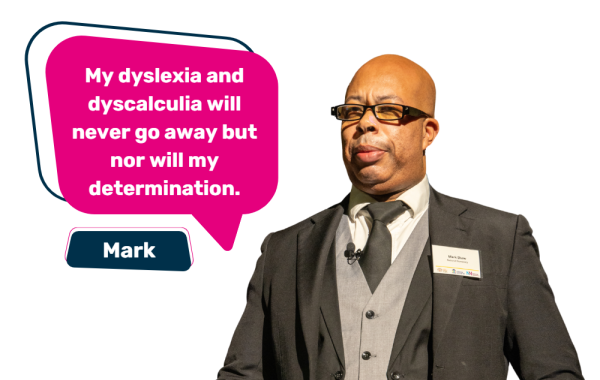
Think about how you feel about maths, and watch real life stories to find out how others feel too. These show that our attitudes towards maths are varied and shared by others.