Research and impact
National Numeracy has its roots in research. The 2011 Skills for Life survey made a compelling case to form a charity dedicated to improving numeracy, and since then we have sought to base everything we do on evidence.
We are always gathering new information on how numeracy impacts us individually as well as on a societal level, and seeking the most effective ways to help everyone build their confidence with numbers. We also hold ourselves to a high level of rigour, assessing and reporting on the impact of our work.
Latest research
Count on It: Numeracy, AI, and Social Mobility
Produced by Policy Connect, with support from KPMG UK, the independent charity National Numeracy and several members of the National Numeracy Leadership Council (NNLC), this report argues that numeracy must become a central part of the UK's AI agenda.
New research published in the report reveals that just 25% of UK adults believe good numeracy skills are needed to use AI tools, compared with 42% who recognise the importance of literacy skills. At the same time, 77% of people who have used AI consider it trustworthy for accuracy, despite AI systems sometimes presenting incorrect information with the same confidence as correct answers.
The report argues that without the confidence to question, interpret and sense-check AI outputs, there is a risk that AI could disproportionately affect lower socioeconomic groups, potentially widening existing inequalities.

Nurturing Number Confidence: The role of public policy in building number confidence between the generations
This report, commissioned in partnership with Barclays, explores the intergenerational link between parents' and children's number confidence.
A lack of number confidence is known to have negative knock-on effects on people's earnings, employment and ability to manage their money. This study found that 2.1 million children across the UK are likely to be at risk of low number confidence due to the ripple effect from their parents and carers.
The report sets out three practical policy steps to help build the UK’s number confidence focused on numeracy parity, support for parents and empowering schools to grow number confident communities.

Number Confidence and Social Mobility
Our latest report explores how improving numeracy could play a central role in improving social mobility and offers a set of recommendations for the nation as a result of the research.
We examined the connection between improving numeracy and opportunities in work and the role number confidence plays in supporting adults with low numeracy to get on a path to a Level 2 maths qualification (equivalent to GCSE maths grade C/4).

The UK Numeracy Index
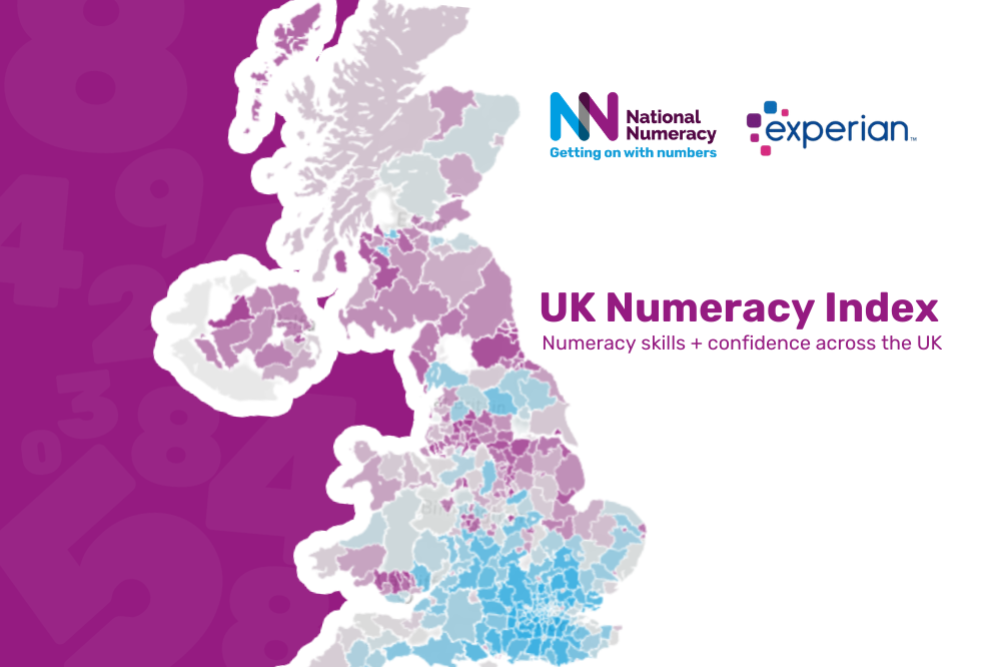
Using data from thousands of learners, and working with data company Experian, we have built the the first ever model to predict and rank areas of the UK by numeracy skills and confidence.
This reveals new and valuable insights to inform how our organisation, government and others address the problem of low numeracy in the UK.
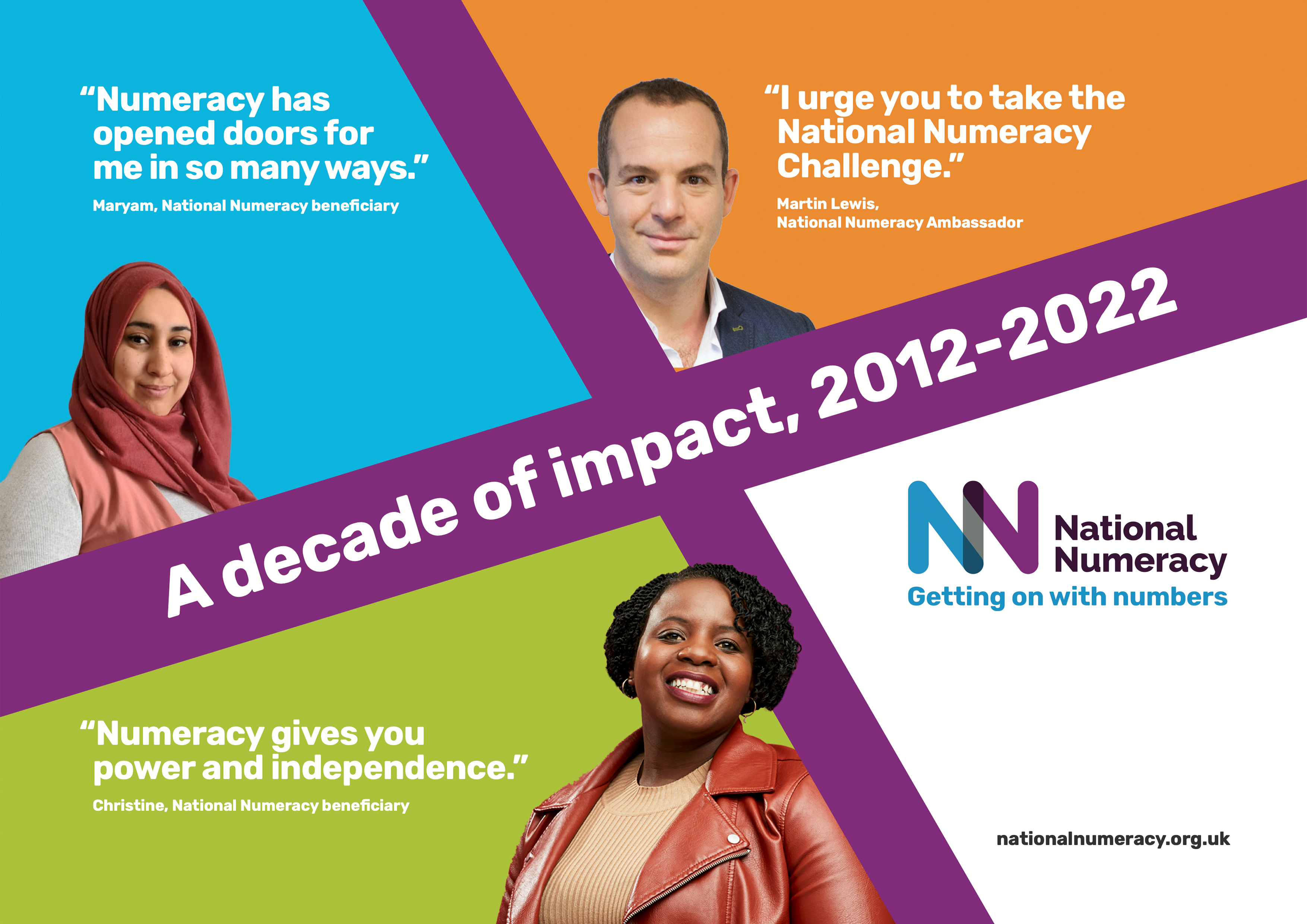
A decade of National Numeracy's impact, 2012-2022
In 2022 we celebrated 10 years of National Numeracy, the UK's only charity dedicated to everyday maths
Over the past decade, National Numeracy has supported hundreds of thousands of people across the country to improve their number confidence and skills.
Discover a suite of materials detailing the impact of a decade of work to improve the numeracy of individuals, communities and the nation.
Annual impact reports
Our Impact 2025
Our Impact Report for 2025 explores the positive changes brought about by National Numeracy in its efforts to support the numeracy of people across the UK.
![[field.image-text]](/sites/default/files/styles/scale_and_crop_600x350/public/2026-03/NN25%20-%20Annual%20Impact%20-%20Article%20image.png?itok=D56ZWE1v)
Our Impact 2024
Our 2024 impact report looks at the positive impact of the charity's work, and showcases many real-life stories from the children and adults we have supported throughout the year.
![[field.image-text1]](/sites/default/files/styles/scale_and_crop_600x350/public/2025-02/Impact-2024-cover.png?itok=t1qr16P2)
Our Impact 2023
Our 2023 impact report reveals the positive change that National Numeracy's work brought about in 2023.
![[field.image-text2]](/sites/default/files/styles/scale_and_crop_600x350/public/images/2023_impact_cover.png?itok=XJ33_9_D)
National Numeracy Day 2026
Centred on the theme Numeracy for Community, National Numeracy Day 2026 brought together schools, employers, charities, volunteers, families and local communities, leading to more than 1.6 million actions taken to improve numeracy.

Number Confidence Week 2025
In 2025, the campaign inspired 289,219 actions towards improving number confidence: a 49.8% increase on last year’s total, making it our biggest-ever Number Confidence Week yet!

National Numeracy Day 2025
National Numeracy Day 2025 was our biggest and most impactful yet. Over 1.2 million actions were taken to improve number confidence and skills—a remarkable 55% increase on all actions taken prior to this year.

Number Confidence Week 2024
The fifth Number Confidence Week inspired almost double the number of actions than the year before, and addressed the ‘number confidence gender gap’, focusing on the barriers women and girls often face regarding number confidence.

National Numeracy Day 2024
In 2024 we achieved unprecedented impact with our most diverse, inclusive and place-based National Numeracy Day yet.

Number Confidence Week 2023
The fourth Number Confidence Week reached more people than ever, with the campaign having now inspired more than a quarter of a million actions to improve confidence with numbers across the UK, since it began in 2020.

National Numeracy Day 2023
The sixth National Numeracy Day, on 17 May 2023, achieved an transformative level of impact across the UK, outlined in a new report.

Number Confidence Week 2022
More actions than ever before were taken by people wanting to improve their number confidence during our third annual Number Confidence Week campaign in November.

National Numeracy Day 2022
The impact report for the fifth National Numeracy Day, on 18 May 2022, reveals how the campaign achieved a genuinely transformative level of impact across the UK.

Number Confidence Week 2021
In just the second year of this ground-breaking campaign, the number of actions people took towards feeling more comfortable and confident with everyday maths was almost double that of 2020's inaugural campaign.

National Numeracy Day 2021
The impact report for the fourth National Numeracy Day, on 19 May 2021, details how this year's campaign took full flight, engaging the nation on a whole new level.

Number Confidence Week 2020
On 2 November 2020, together with Founding Partner TP ICAP and Lead Partners Experian, KPMG and Santander, we launched a brand-new campaign, Number Confidence Week, to help people feel better about getting on with numbers.

National Numeracy Day 2020
On 13 May 2020, despite the challenging and rapidly evolving environment of the Covid-19 pandemic, National Numeracy delivered a record-breaking National Numeracy Day that engaged more people than ever before, this time in the form of a virtual festival.

Key research


Research within your organisation
We have worked successfully with dozens of organisations using our digital tools to understand numeracy skills and confidence within cohorts, whether in education or at a workplace.
Find out how we can gather insight within your organisation.