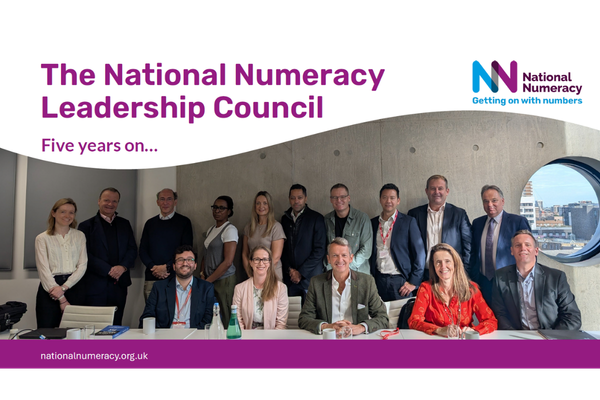
This has included engagement with government ministers, contributions to discussions around Maths to 18 and the Royal Society’s Mathematical Futures programme, evidence to the House of Lords inquiry into Numeracy for Life, and joint communications to hundreds of MPs and Metro Mayors.
Through powerful thought leadership, members have also helped National Numeracy explore how numeracy intersects with some of the biggest challenges facing people and society.
Most recently, this has included Count on It, exploring the relationship between numeracy and people’s ability to understand, use and benefit from artificial intelligence – and the risk that existing inequalities could be widened if people are left without the number confidence and skills they need.
Tackling inequalities
One of the Council’s major areas of work has been addressing inequalities in number confidence.
The Council’s Gender Taskforce brought together senior leaders to examine the persistent gender gap in attitudes towards numbers and identify practical ways organisations could help tackle it.
This work led to the publication of Numeracy for Gender Equality and the Numeracy Equality Charter, setting out recommendations and practical actions to help create change.
Alongside influencing policy and national debate, the Council has helped expand the network of organisations committed to improving numeracy, encouraging action through workplaces, partnerships, schools and communities.
Five years – and the ambition to do more