Numeracy Volunteers: Schools' hub
Welcome to your resource hub.
Use the resources on this page to support you through the process of hosting Numeracy Volunteers at your school.
Get pupils thinking about the maths in the real world with our volunteering programme!
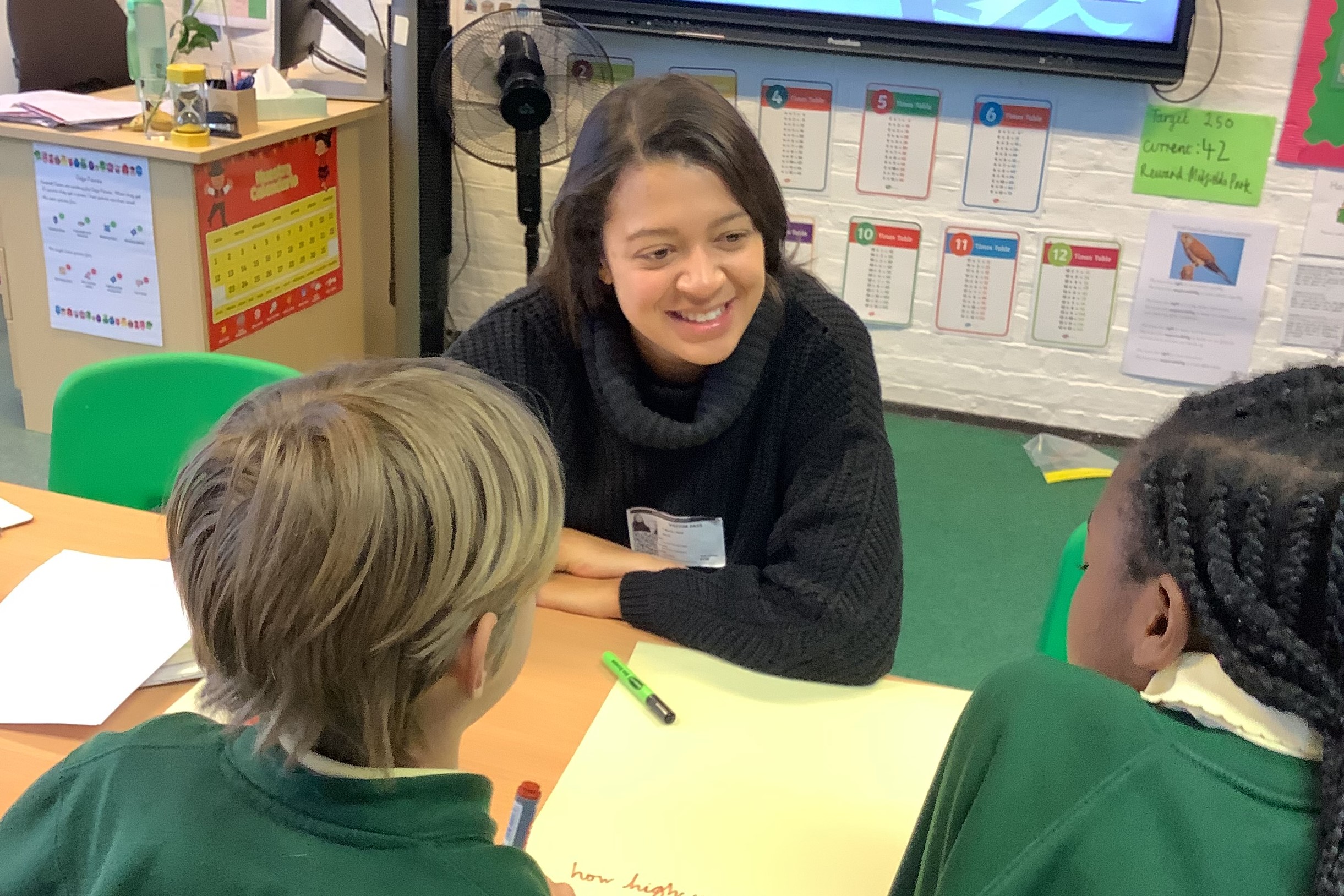
Our corporate volunteers will come into school to share their experiences through our ‘My Maths Story’ assembly and/or our ‘Maths in the Real World’ interactive class lesson. It's a great way of raising the profile of maths in your school and helping pupils see its value, and why they learn it.
The assembly and classroom session aim to:
- enable pupils to make the link between what they are learning and the world of work,
- get pupils thinking about jobs that involve maths,
- inspire pupils to see the maths in everyday life beyond school,
- challenge stereotypes about careers and the world of work,
- meet the Gatsby Benchmark of Good Career Guidance: Benchmark 4 – Linking Curriculum Learning to Career and Benchmark 5 – Encounters with employees.
Our volunteering activities
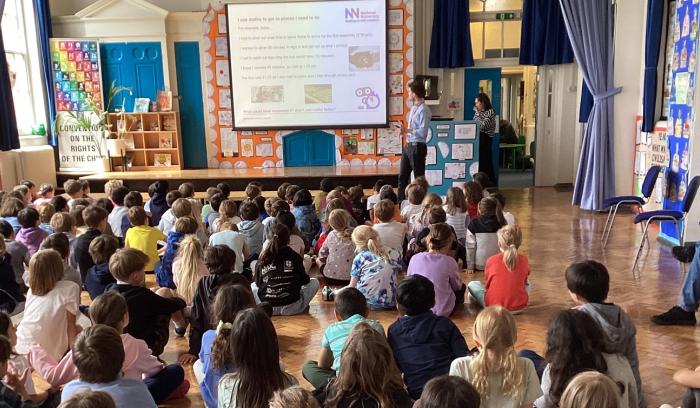
Activity 1: My Maths Story Assembly
For this activity, the volunteer will deliver an assembly for pupils aged 7-12 years all about their experience with maths. They’ll talk about how they found maths at school, how they find it now, how they use it in their job and life outside of work. They will also ask the pupils about how they use maths every day outside of school. The assembly takes about 15 minutes and is based on a completed PowerPoint slide deck we will send to you in advance.
We will send you the slide deck for the assembly in the days before your visit. It will be sent via an online transfer link and you will need to download it and check it is working. If you have any problems downloading the deck or don’t receive your deck please email volunteering@nationalnumeracy.org.uk
Activity 2: Maths in the Real World Class Session
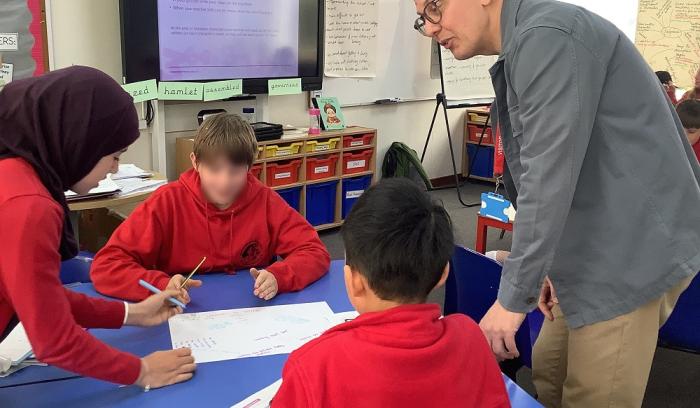
This activity is perfect as a follow up to the assembly. A volunteer will come into school to assist with this class teacher-led lesson for one or more classes with pupils aged 7-12 years. A carousel activity will see 5 or 6 groups of pupils discuss our real and fictional characters jobs and hobbies, exploring the maths used in each. This will be followed by an individual reflective activity where pupils think about how they use maths in everyday tasks or hobbies. This session lasts 50-60 minutes.
FAQs
- Will the volunteer have a DBS/Access NI/PVG check?
No, volunteers do not have a DBS/Access NI/PVG check. All volunteers will go through safeguarding training and teachers must always accompany volunteers during their visit. Please let the office staff know their names and time of arrival and that a check is not required. - How long does each session last?
The assembly lasts around 15-20 mins. We ask teachers to help with keeping track of the time and facilitating the questions asked by pupils in order to stay on track. Each class session lasts 60 mins. If you run over, the individual activity sheet can be sent home as homework. - Who leads the Maths in the Real World class session?
The class teacher leads this session using our lesson plan, slide deck and activity sheet above. The volunteer is there to support only. Please do not ask the volunteer to lead the session. - What resources do I need to prepare before the visit?
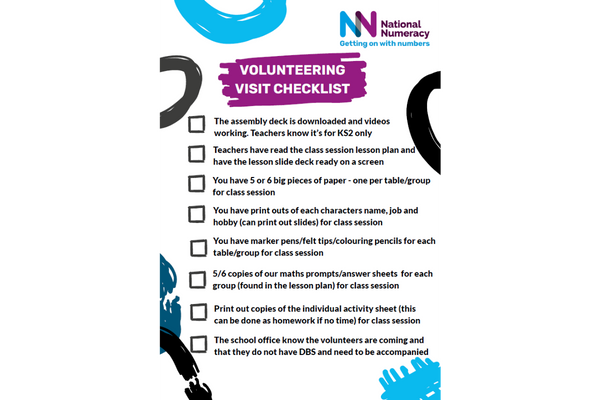
For the assembly, you will need to have the volunteer’s assembly deck downloaded (we will send this to you prior to the visit), you will need to check that the video is working and have the slides ready to show on a screen. For the class sessions, you will need to have read through the lesson plan, have the lesson slides ready on a screen and the individual activity sheets printed out. You will also need to set the classroom up ready for the class to be split into 5 groups, each group with paper, pens, etc. Please check you have everything ready using the checklists above. - What age of children are these activities for?
The assembly and class session are for pupils aged 7-12 years. - What training do the volunteers have?
Our volunteer training sessions go through key safeguarding points that they will need to be familiar with before they visit you school. We also go through the mission of our charity and the importance of number confidence. We inform them of the best ways to present to pupils and engage them, encouraging positive language and attitudes towards maths.
Safeguarding
Our volunteers aren’t DBS/Access NI/PVG checked, so must be accompanied when on the premises at all times. In our volunteer training we cover safeguarding dos and don’ts, what to do if a pupil makes a disclosure and how to report a concern.
How did it go?
We love to hear how our volunteer visits go. We'd be pleased to get your feedback, photos and, if possible, for you to post about your visit on your school's social media and/or in your school newsletter.
Supporting children with the Family Maths Toolkit
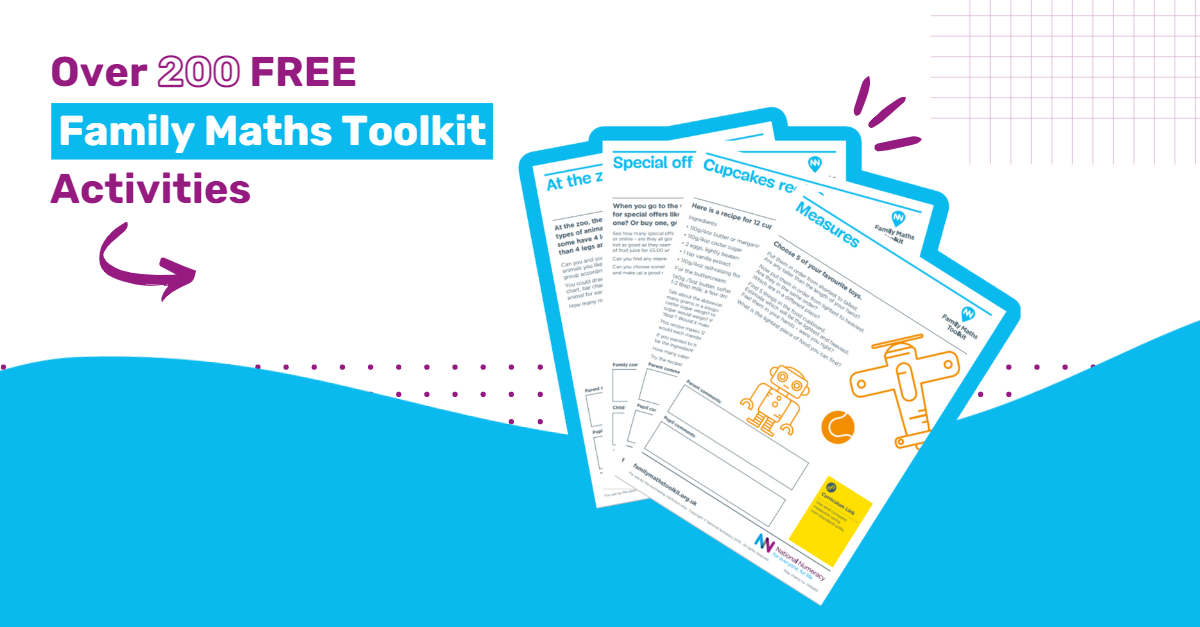
The Family Maths Toolkit is full of ideas to help parents, families and children aged 13 and under enjoy everyday maths together.
You may wish to share the resources with colleagues to use with their own families.
Get access to free Family Maths activities
Schools & Families programme
Want to work with us more to support pupils and families? National Numeracy have launched a new Schools & Families Programme, supporting primary schools across the UK.
The programme works with primary schools to support families, so that pupils feel more positive about maths, and have greater awareness of the value of numeracy outside the classroom.
We also work with schools to increase parents’, carers’ and school staff’s own confidence with numbers, aiming to establish lasting approaches and strategies which can continue in the years following the programme.
Try the National Numeracy Challenge
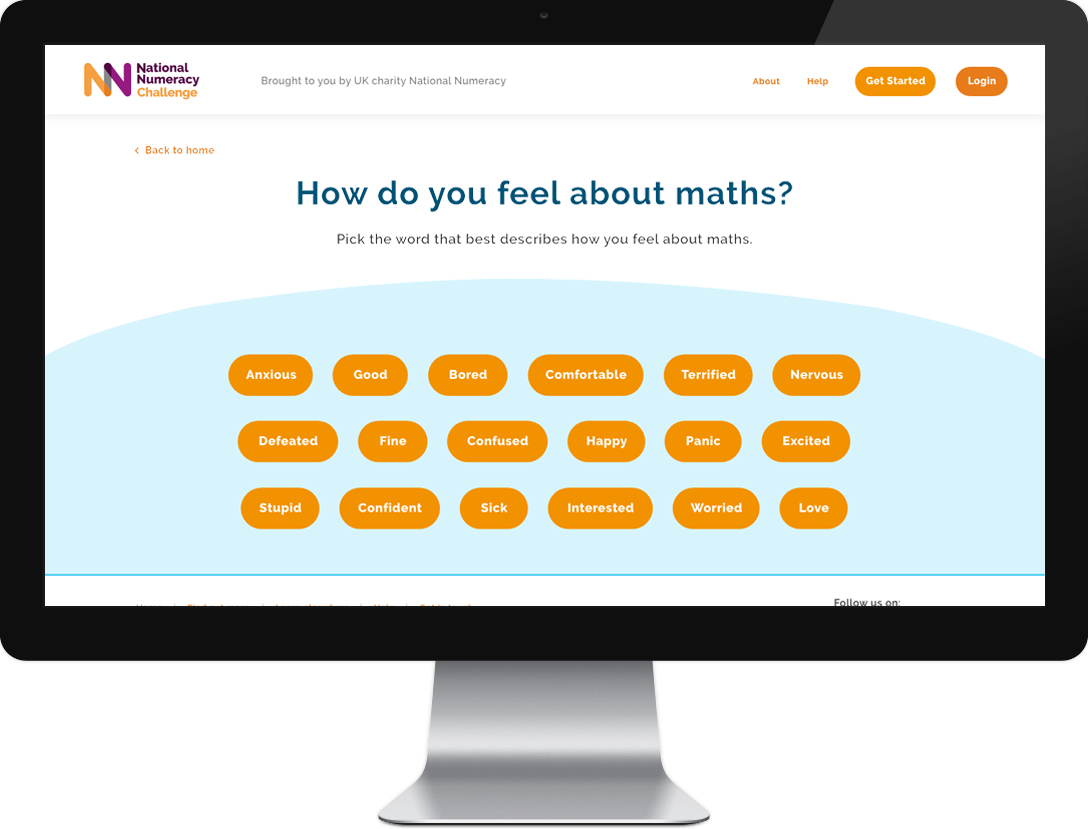
However you feel about maths, you’re not alone. The National Numeracy Challenge is a free and easy-to-use website you can use to improve your confidence with numbers, in your own time and at your own pace.
It’s ideal for brushing up, checking your level, or for catching up on learning you missed, and it’s all about the maths you need in daily life and at work – no algebra or trigonometry.