Can you tell us a bit more about The Mullany Fund?
The Mullany Fund is a social mobility charity based in South Wales, established in 2008. We primarily work with young people aged 14 to 19. Our goal is to help them into the STEM sector, whether that be going to university, apprenticeships, or looking beyond that into careers.
We particularly focus our time and money on young people who might find it that bit harder to achieve their goals – for example, coming from a low-income background or area, where STEM career role models might not be so visible.
Three times a year, we run e-mentoring. We have our own bilingual protected app and we recruit mentors across multiple STEM disciplines – they're matched one to one with a young person and they’ll message each other via the app.
It aims to give maximum access for both the young person and working mentor. We also hold webinars and career events, to boost CVs and career understanding. Our mentors are all volunteers and the charity funds their DBS check unless they have one already. We have a link available on our website for people to find out more.
Do you find that some young people lack confidence?
At The Mullany Fund, we keep in touch with young people, mentors and school staff, to understand how the programme works and – just as importantly – how it should evolve. When I joined The Mullany Fund and started going out on these visits, this issue of career confidence and aspiration-raising was really clear in the conversations I was having.
The beauty of our e-mentoring scheme is that we can bring a role-model right to the phone of a young person, in a field they are interested in. One Year Nine pupil recently told me: “I liked the way my mentor shared her own personal career experience, how she’d done it, and she is already qualified and in the job, so it made me think maybe I could do it too.”
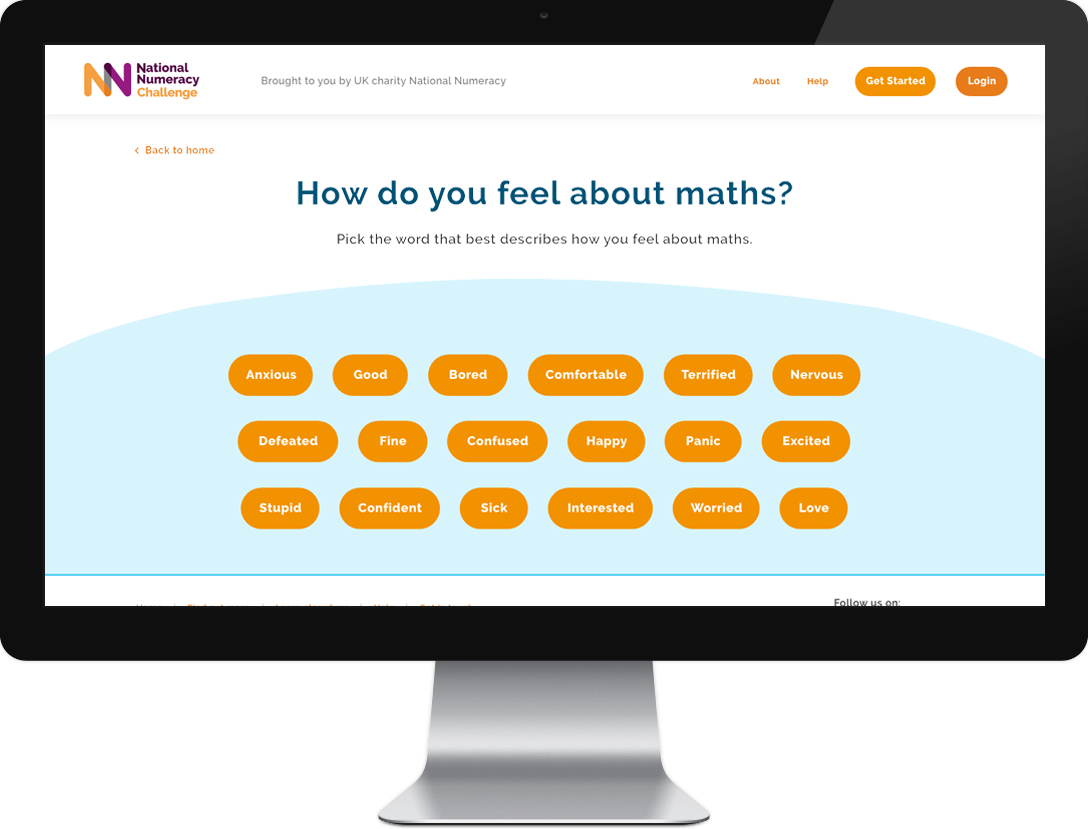
But what was also coming through loud and clear from our school contacts was the maths anxiety that National Numeracy is trying to tackle. We take regular advice from local experts, and they’ve always said that having a growth mindset around maths is crucial. So the Trustees and I were keen to strengthen this part of our programme.
The message is for young people to realise maths skills can be improved and they can do it. We’re not trying to get our mentors to be maths tutors, but they are in a great position to be positive role-models, just as they are on careers more generally.
What made you decide to train as a Numeracy Champion?
I’m a good example of someone who has grown to love numbers. Maths at school didn’t bring me a lot of joy. But both my children love numbers, and it was great to watch that develop, and I think I learnt from them.
Also, as my career developed, I started to use data and statistics more. I loved what numbers could do, to help you identify a problem and track a solution. I’ve actually done some extra study: I’ve got a literature degree but a Statistics Masters, which is a bit unusual!
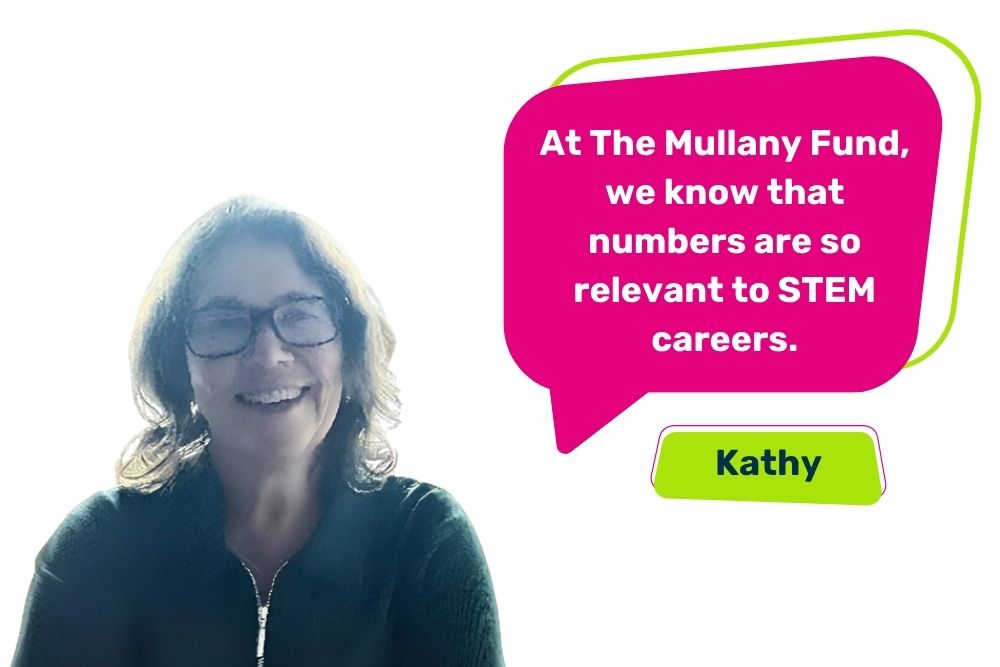
At The Mullany Fund, we know that numbers are so relevant to STEM careers. And we wanted the young people to see that whilst some “exam maths” might not look relevant, maths is really, really relevant in STEM workplaces.
So, when my contact at The Maths Support Programme Wales suggested that the Numeracy Champion training would fit into what we were doing at The Mullany Fund, I jumped at it and signed the Mullany team up.
How did you find the Numeracy Champion training?
I had a pre-training call with Tamsin, who showed me the research on low number confidence in some of the South Wales areas we work in. This made me sure we were doing the right thing.
During the training, I realised we were a bit unusual in that we are trying to boost young people’s positive attitudes via our mentors. But the trainers were so flexible, and the ideas behind the Big Number Natter work so well for us. I’ve just tweaked it though: the Big Number Natter happens through texting, not talking!
How do you use the Numeracy Champion training learnings at The Mullany Fund?
We've already updated our mentor training to include a discussion about numeracy specifically. I’ve encouraged mentors to ask their mentees: “How are you getting on with maths?” They are encouraged to ask the young person whether they are tapping into people who can help, or sharing a story they have – even as a person now in a STEM job – about grappling with a tricky bit of maths.
What do you think of the National Numeracy Challenge?
I enjoyed it. The variety of maths types in the Challenge is so interesting. And this also gets home to you that numbers are a natural part of so many day-to-day aspects of life. And it is well-designed, so that it stops and gives you a bit of a recap if you need it and works with multiple abilities.
What would you say to anyone thinking of becoming a Numeracy Champion?
Definitely do it. I really enjoyed it, and also for an organisation which has aims like ours, it makes our impact better. We all know the power of that chance conversation – someone being encouraging at a key moment or sharing a personal experience that makes you feel inspired or confident. That is the key to our mentoring and the ideas behind Numeracy Champions are so in tune with that.