Big Number Natter: Debbie and trainee teachers in Lancashire
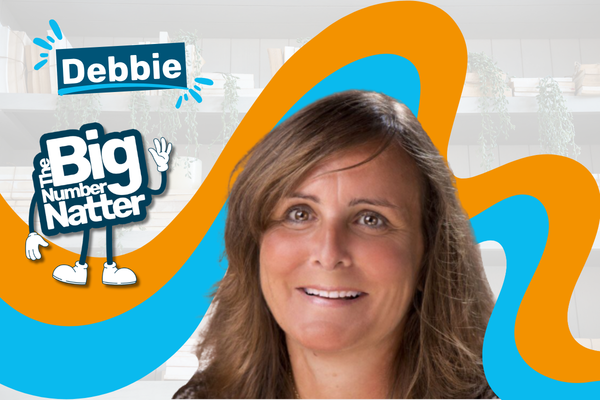
Debbie Hooton is Primary Mathematics Subject Lead and Senior Lecturer at Edge Hill University.
We sat down with her for a Number Natter to hear all about how the university is ensuring that trainee teachers develop the necessary number confidence and skills for their future careers.
What issue did you face with students' maths skills?
When the skills tests were abolished by the government we needed an indicator of the student teachers’ maths skills. The onus was put on universities to make sure the students had basic numeracy skills when they finished their ITE (Initial Teacher Education) programmes.
The students come to us with a GCSE in maths, but some of them haven't got any further than that, so we wanted to identify their gaps in subject knowledge and help them develop their sense of maths identity from there.
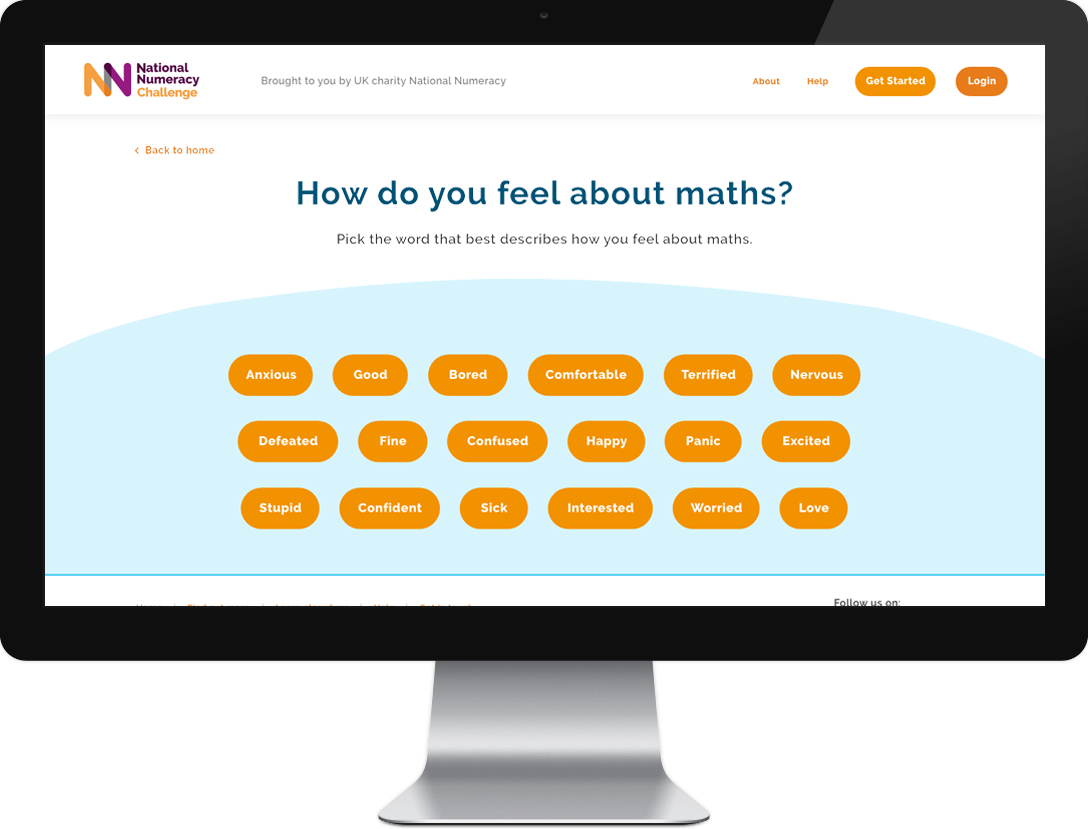
Someone at National Numeracy recommended the National Numeracy Challenge, which I know quite a lot of other ITE providers use as well, and it seemed to fit the bill.
What's your experience of students’ relationships and confidence with maths?
We’ve got a lot of students who come in and they're really confident and they're happy; they've got GCSEs and A levels and they love maths. Some students think they're better at maths than they really are and the National Numeracy Challenge identifies that.
Then we have a lot of students who really lack confidence. The first words out of their mouths will be: “I hate maths,” “I can't do maths” or “I hated maths at school.” We always have those conversations saying: “Well it may not be a favourite subject, but you're going to have to teach it.”
"The first words out of their mouths will be: 'I hate maths.'"
What I love is that so many of them come back to us towards the end of their training, saying: “It's still not my favourite subject, but I really enjoy teaching it,” which is always good.
A lot of the mature students are worried about the fact that they've had that gap between GCSEs, A levels and then they’re coming into teacher training. So there's always that worry there and that ‘maths mindset’ – there are people that believe you're born with a ‘maths gene.’
Using the resources National Numeracy provides helps us with the students’ maths mindset and developing it to become: “I might not be the best at it, but I can do it.” I think our experiences are a lot about maths mindset and confidence.
How do you use the National Numeracy Challenge?
We ask everybody to get a score of 70+ [on the National Numeracy Challenge] before they go on their first professional practice, and then they're asked to get 80+ by the time they go on their second professional practice, which demonstrates they've got those basic skills.
We monitor it really closely using the Power BI system National Numeracy provides, so by the end of their training they have all got 80+ and then they're all compliant to carry on and graduate with qualified teacher status.
We get some people who get 100% straight away. Also, a large amount get 80+ first time round. I would say the majority get 70+ from their first time, but we do have some people that score under 50. We offer them tutorials to support them with that. We always get everybody through on 80+ before they finish their teacher training.
What are the benefits to the students?
We used to have what we called a ‘maths audit’ before we used National Numeracy’s system, which was about 40 questions that we'd created on our learning environment. We got a score and we could go through and look at each area and what people were stronger in.
"Many people can't see the point of maths, but it actually demonstrates that we use maths all the time.'"
Ours was very much a set of maths questions, but what we love about the National Numeracy Challenge is the fact that it's very much putting maths into a context. Many people can't see the point of maths, but it actually demonstrates that we use maths all the time every day.
It’s also about getting them ready for teaching and talking to their school mentors about areas they feel they need more practice and experience of.
Try the National Numeracy Challenge
However you feel about maths, you’re not alone. The National Numeracy Challenge is a free and easy-to-use website you can use to improve your confidence with numbers, in your own time and at your own pace.
It’s ideal for brushing up, checking your level, or for catching up on learning you missed, and it’s all about the maths you need in daily life and at work – no algebra or trigonometry.