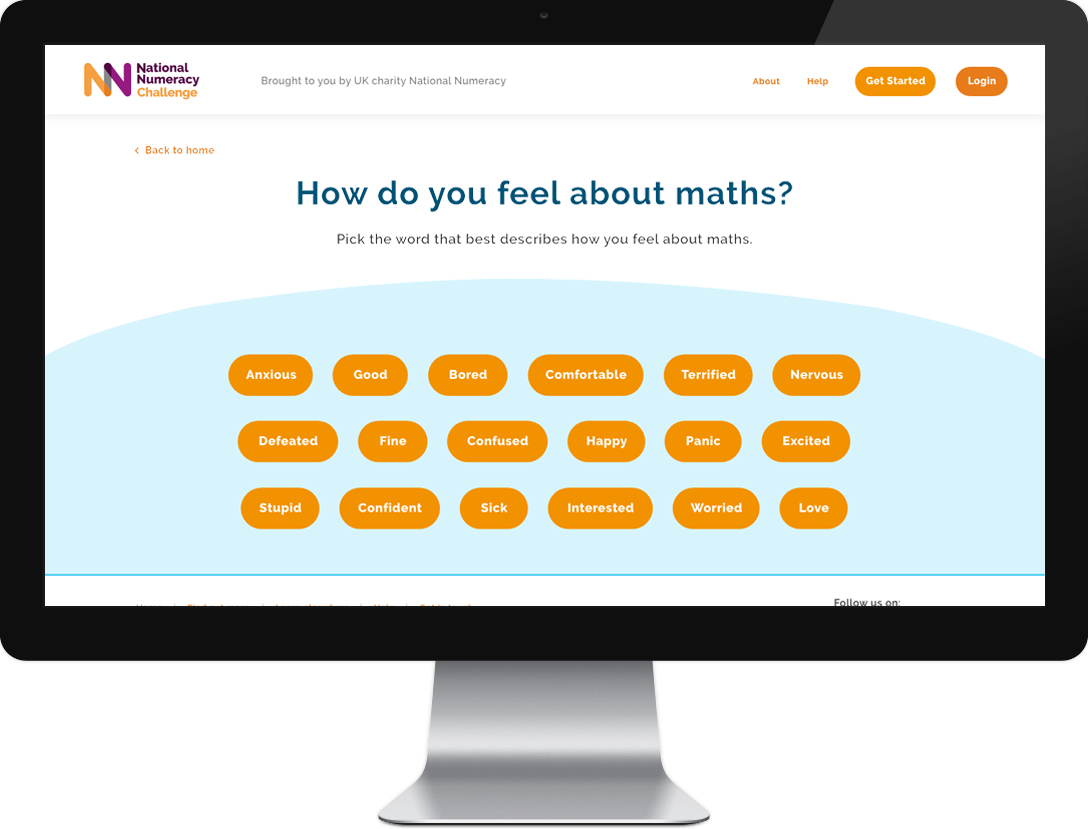
30% of school leavers (18-24-year-olds) have said that using maths and numbers makes them feel anxious. Research has also found that 22% of 18-24-year-olds say their mental health has suffered due to struggles with maths, and 39% say a lack of maths confidence has made it harder to cope with the stresses of life (e.g. managing money, getting a job, or managing their health). To tackle this, it is key that we support children throughout their education to feel better about numbers.
What is maths anxiety?
Many children and adults feel worried or stressed when faced with numbers and maths, and some have physical symptoms too. While there is no formal test for maths anxiety, the following symptoms can be brought on by situations involving numbers, or even just the thought of doing maths:
- Feeling panicked or stressed
- Feeling flustered or struggling to concentrate on a calculation
- Increased heart rate
- Sweating and nausea
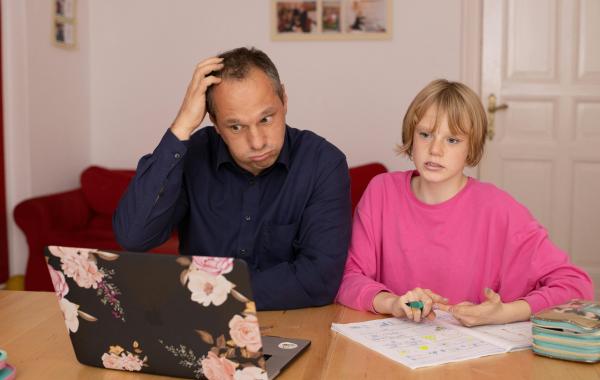
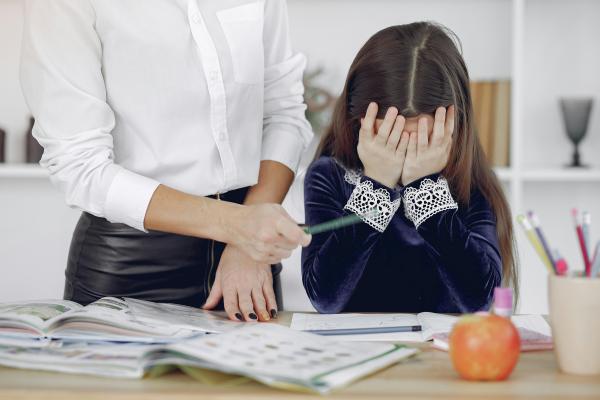
Spotting maths anxiety in children can be difficult, as Dr Thomas Hunt, Associate Professor in Psychology and lead of the Mathematics Anxiety Research Group at the University of Derby, says: "Younger children […] do not always have the ability or understanding to articulate how they are feeling, or the reasons for why they feel as they do. Children who experience particularly high levels of maths anxiety may not even understand it as maths anxiety, but they may display signs that their mental health is being affected by it, e.g. becoming distressed during maths homework."
How do children feel about maths?
Research by Teach First has found that 54% of girls and 43% of boys lack confidence in learning maths. A recent report by the Richmond Project has also suggested that general enjoyment of the subject worsens as children grow, especially among girls: at ages 4-8 boys and girls show the same enjoyment level of 86%, but by 9-18 boys’ enjoyment decreases to 71%, while girls’ decreases to 49%.
Why does it matter?
Dr Thomas Hunt says:
"A little concern or nervousness around maths can often be normal, but repeated and heightened anxiety can be harmful. There are clear consequences to feeling highly maths anxious, from under-performing in maths tests to general avoidance of anything involving (or thought to involve) maths.
"Yet, there are some hidden, and sometimes little understood, effects of maths anxiety – effects that may niggle away at a person’s mental health more generally. For instance, impacting mood and self-esteem. Likewise, negative mood and maths attitudes are likely to contribute to feeling maths anxious, creating a vicious cycle that can be difficult to escape."
From our work, we know that fearing maths can have lifelong effects. Research conducted by Barclays in 2025 found that over a quarter of adults (27%) had faced financial issues or avoided financial tasks over the previous year due to low confidence with numbers. In addition, a striking 76% of 18-27-year-olds believe that their finances would be in better shape if they had stronger number skills and confidence.
We have also found that almost a third of adults say they actively try to avoid anything to do with numbers and data. Over half of adults stopped studying maths at school as soon as they were able to, and over a third say they would be put off from a job role if it mentioned having to deal with numbers and data.
What can be done to ease maths anxiety?
Unfortunately there is no one-size-fits-all fix for maths anxiety, but some tactics include:
- Talking openly: being able to talk about worries in a safe space, and learning that others feel the same, can help both children and adults feel less alone or ashamed.
- Addressing unjustified beliefs: e.g. that someone is doomed to fail, "just not a maths person," or that boys are inherently better than girls at maths.
- Reducing pressure: this can be difficult in a school environment but removing time pressures where possible and minimising talk of expectations and targets can be helpful. Also encourage writing down numbers and calculations where allowed, rather than trying to keep everything in their heads.
- Discouraging children and adults from comparing themselves to others: instead encourage them to focus on their own journeys and milestones – and celebrate the small wins!
- Mindful breathing: this can be a useful first step in addressing the physical symptoms of maths anxiety.
- Expressive writing: writing down worries before doing maths has been shown to help with both maths performance, and alleviating anxiety.
Find out more about these tips and other ideas
How can we help children to enjoy maths?
- Praise children for effort, rather than talent: praising children for the hard work they’ve put in, or for working out the steps to get an answer, is more helpful than simply telling them they’re clever. It helps show that it’s not about natural ability, and that by working hard they can always improve.
- Talk positively about maths: avoid saying things like "I can’t do maths," "I hated maths at school," or "we’re just not maths people". It’s easy for children to take that on board themselves.
- Point out the maths in everyday life: show them it’s not just something they do at school. Whether cooking, using money, or planning travel, show them that maths is everywhere and it will help them see the value.
- Help yourself to help others: Parental engagement has been found to have an average impact of +4 months on pupil attainment, but if you fear maths yourself, it can make helping children harder. If this is you, you’re not alone. Research has found that almost a quarter of parents in the UK say that helping with maths homework makes them feel anxious, and between 20% and 30% of secondary maths teachers report that during lessons they sometimes suffer from maths anxiety. Whether as a parent, carer or teacher, building our own confidence with numbers helps when supporting children.