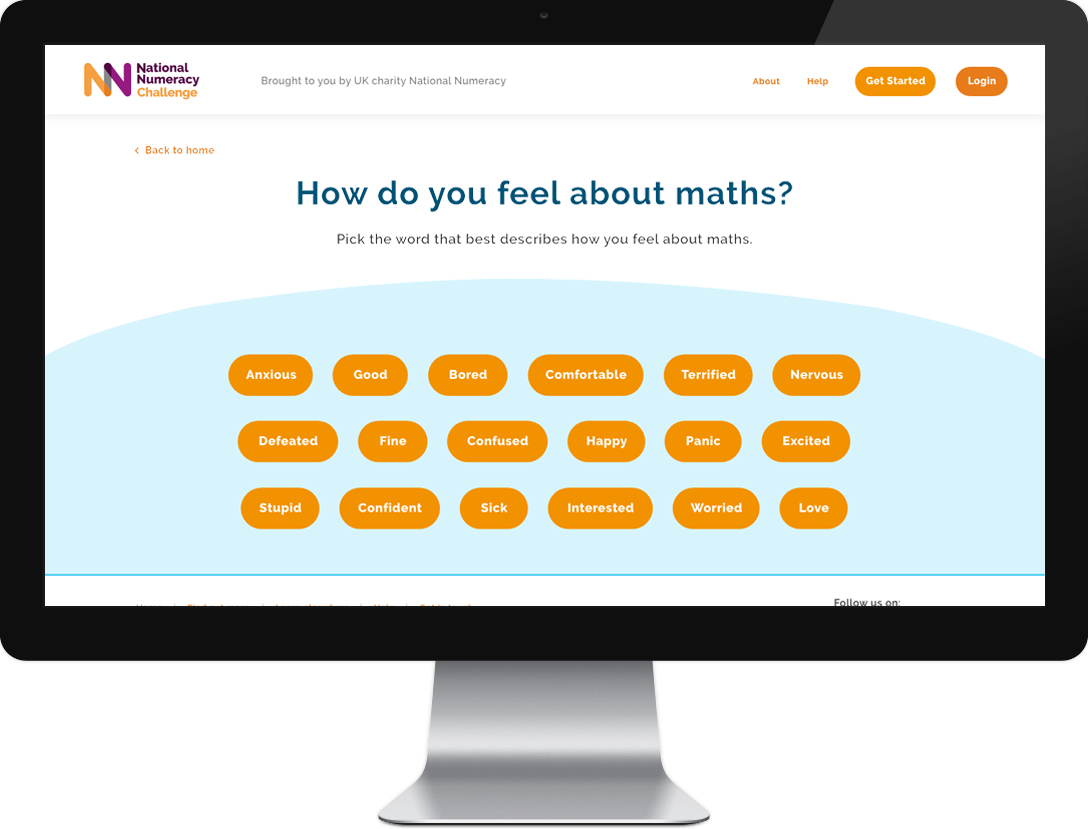

The thought of being asked to help with homework might see those emotions resurface at a time when you want to reassure your child they can do it, rather than expose your own lack of confidence.
The good news is you don’t need to be a maths genius to help your child with their homework!
Our research tells us:
- 23% of parents/carers say that having to help with their child’s maths homework makes them feel anxious
- 20% parents/carers say maths homework has caused arguments at home between them and their child
- 17% of women say that having to help with their child’s homework has made them feel like crying.
“I’ve got three kids, and I felt like a let-down because I was struggling to help them with what they were learning.” Jason
“I would look at my daughter’s homework and think: ‘Oh my god, how do you do that?’” Mel
Does this sound familiar to you?
Working with people across the UK, we know that helping children with maths homework can be a source of great anxiety.
Maths anxiety can follow people into adulthood
Memories of sitting in maths classes and feeling completely out of your depth, hoping the teacher wouldn’t ask you for the answer, can cause people to make excuses not to help their children years later – anything to avoid having to relive the stress of confronting maths.
A fear of doing it wrong, exposing your own maths anxiety or worrying you won’t understand how maths is taught today can all hold people back from approaching the subject.
“Homework with my two sons was a particular struggle; they’d come to me with their maths questions, and I’d break out into a cold sweat, fumbling through the basics, hoping they wouldn’t catch on to my complete lack of confidence.” National Numeracy Ambassador Denise Welch
“I could never help my daughter with her homework. I was worried that if she failed, she would tell them ‘Mummy did it for me’.” Ijeoma
“When my eldest son was small and starting to bring home maths homework, I still believed that I couldn’t ‘do numbers’. I would try to help him but got caught up in thinking I might be doing more damage than good and would unthinkingly say things like ‘I’m not good at maths’, and ‘I hated maths in school’.” Kayla
You don’t need to be a maths expert to help with homework
As a parent or carer, it can often feel like children think you know it all, but the truth is: it is OK not to know the answer to everything!
If maths homework is proving a struggle, why not try the following?:
- Admit you don’t know the answer, but that you’ll try to work it out together. It’s good for children to learn that solutions don’t always come instantly; sometimes you need to go through the workings to find the answer.
- If you’re worried you won’t understand how maths is taught today, ask your child what methods they use at school. You may see similarities to what you already know and be surprised at what you can remember.
- Avoid using language such as: “I was rubbish at maths at school,” “I have never been able to use numbers” and “You won’t need any of that stuff in the real world anyway.” Our research suggests parents pass on their maths anxiety down through the generations so by using negative language around the subject you could be reinforcing a negative attitude towards maths without realising.
- Focus on the process involved and praise effort rather than talent. It’s encouraging for a child to hear: “Well done for trying so hard,” even if they got the answer wrong. Feeling like a failure for not achieving the correct answer straight away could put them off further learning, whereas learning the methods of how to solve a problem is the first step to getting the answers right later on.
For further help, ask your child’s teacher about initiatives or workshops the school may run to help parents and carers. You may be surprised to learn that others feel exactly the same way as you!
Meanwhile, the National Numeracy Challenge is a great way to help improve your number confidence and skills. It’s free and full of everyday examples of numeracy, with resources to help if you’re struggling.
The importance of building number confidence
However you feel about numbers, the first step to improving your skills is improving your confidence.
Showing children it’s OK not to know the answer, encouraging them to ask questions and work things out can be extremely valuable – seeing that you as an adult also need help shows it is perfectly normal not to understand at first and that improvement is possible with effort and perseverance.