Eddie spoke to us about the hurdles they face as a Further Education college, the anxieties and barriers they see in students, and how staff across the departments are coming together to support numeracy as an important factor in all vocations.
Your Stories
Supporting Further Education in Northern Ireland
26 Jun 2026
In 2026, National Numeracy began training Numeracy Champions in the Belfast area, thanks to support from our partner TP ICAP.
Eddie Conlon is Deputy Head of School (Numeracy, GCSE Maths) at South Eastern Regional College (SERC), and a trained Numeracy Champion, with four more members of the SERC team taking part in the training too. Together they are overcoming barriers to build number confidence and skills among students, equipping them with the numeracy and qualifications they need in their lives.

The barriers to learning in further education
In Northern Ireland, almost everyone joining fulltime Further Education without a GCSE equivalent pass in English or Maths is timetabled for Essential Skills as part of their vocational program. In SERC alone, that meant about 530 numeracy exams in January and another 600 in June. We have around 450 Level 2 trainees attending numeracy this year with a lot of them already thinking of apprenticeships or Level 3 programs so in-year progression is also important. The sooner we help students achieve at Level 2, which is considered a GCSE equivalent in many cases, the more doors open for them professionally and academically.

“Students are finding it increasingly difficult to get on to apprenticeships.”
But with that comes the challenge that, for whatever reason, maths hasn't worked for students previously – that may be maths anxiety, feeling like a failure, or a knock-on from COVID. We need to overcome those barriers and show them the significance of numeracy as part of their growth and plan, and their role in that journey.
The Numeracy Champion training has equipped the team with necessary skills to engage students
We have further strengthened our relationship with our Learning Support team this year, as they play a key role engaging and supporting students with numeracy, so we arranged for places on the Numeracy Champion training for them as well. Some of the Learning Support team have attended our courses themselves and see the importance. Others haven’t but see the holistic approach to numeracy being about real-life problem solving. That’s particularly useful when it comes to our trades such as plastering, joining, motor vehicle, beauty and hairdressing. They don't want to be stuck behind a desk learning simultaneous equations. They want to know why they're learning what they’re learning and how they’ll use it in their lives. The Learning Support team help us communicate that.
“They want to know why they're learning what they’re learning and how they’ll use it in their lives.”
I also completed the Numeracy Champion training to see how we could take it to the next level, which is why two more of our Essential Skills team were signed up after me. We moved from a “withdrawal” process, when students are removed for non-attendance, to a “re-engagement” process a few years ago, so your course has given us more tools to engage the students in their numeracy journey from day one, as well as looking at the pastoral and learning support issues too. Also, the fact the training is not to do with maths, and is instead about numeracy, is really important too. Numeracy is not just maths, it’s much bigger, so it’s helped us develop more ideas on the language involved as well, especially as some students may be working towards English qualifications in parallel to their numeracy.
“Your course has given us more tools to engage the students in their numeracy journey from day one.”
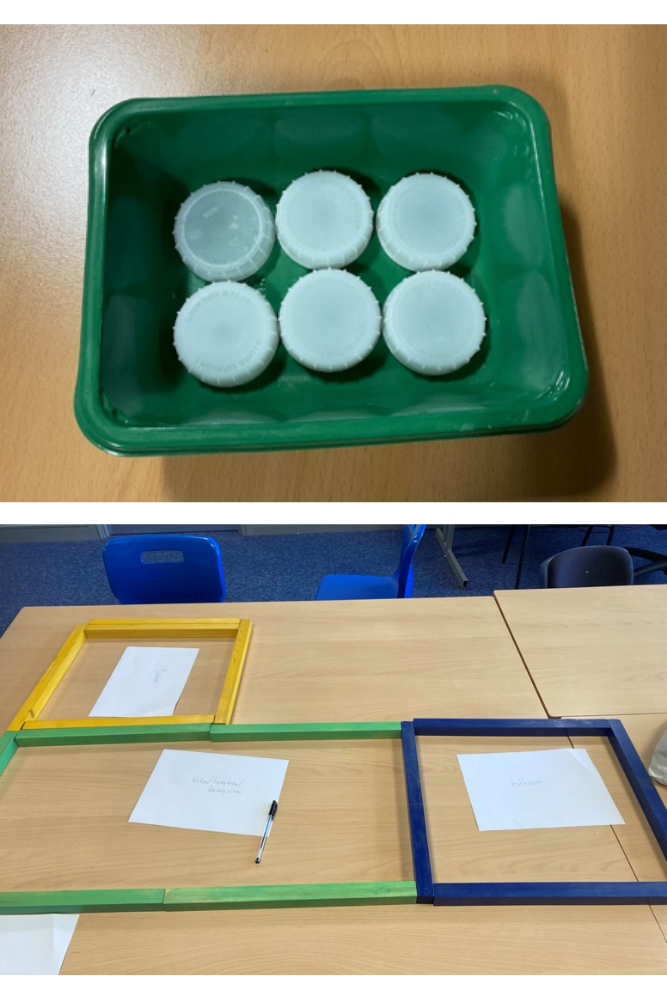
We also continue to make numeracy hands-on instead of theoretical. One of National Numeracy’s resources is about a box for six golf balls, and students are wondering, “Is that perimeter or area?” So, we can say, “Make the box and then I'll explain what you did in mathematical terms.” It’s letting them see what the words on the paper mean in reality, so the next time they face it they have the “aha” moment.
"Taking 30 minutes to take a step backwards, to then take a step forwards again, means they actually see what they’re being asked."
Another example is that we’ve found that the new generation often can’t read analogue time, so we're covering that – taking 30 minutes to take a step backwards, to then take a step forwards again, means they actually see what they're being asked, why they're doing it and how to solve those types of problems.
Preparing for next year and getting ahead
I’m also preparing inductions for next year using the Big Number Natter, to start lessons with “Why do you like or not like maths? What maths are you going to have to use?” I want a conversation where there's no right or wrong answer, because then they're not afraid to engage and talk to each other. Then, when I'm looking for volunteers, they're not afraid to step up and put their name forward, because we're all in it together.
Working together across the college departments
I'm really fortunate as I have a team of 12 maths and numeracy teachers and they're all heavily invested in our students’ development. A couple of weeks ago we had our Staff Excellence Awards, and the entire Essential Skills/GCSE team won Team of the Year! This is significant, because we know we are not necessarily students’ favourite subject and can add more work to vocational teams, asking them to help us in terms of attendance, for example, when students are also struggling in their vocational course. This award showed me and the team, the whole college recognises we need to come together for students to progress within the college, and that includes supporting and developing their numeracy skills.
"Students know we’re there for them."
The college is committed to our re-engagement process, so we've just appointed a full-time member of staff for this role, whereas we were previously sharing a member of staff with another department. Now they can ring students or meet them on campus for a proper conversation more easily. For example, instead of saying “Here’s the work you missed,” they can talk to students and say, “I know you were sick. How are you doing? How can we help? Here’s work for when you’re able, and don’t forget Eddie’s there if you have any questions.” It’s showing them that the resources are there to help them, making it easier for them to return to class. Students know we're there for them.