As National Numeracy's Training Manager I've spent the past three years delivering Numeracy Champion training online, so the opportunity to deliver the programme to a number of inmates in prison was both exciting and a little daunting.
Blog
The value of numeracy in prisons
18 Feb 2026
By Bryony Clark, Training Manager
When people think about prisons, maths is not always the first thing that comes to mind, but here's what I learnt about the value of numeracy in prisons.
Recently, with funding from City & Guilds Foundation and BACO (Bucks Association for the Care of Offenders) I had the opportunity to visit HMP Aylesbury to deliver our Numeracy Champion CPD programme, an experience that challenged my expectations and reinforced just how powerful positive conversations about maths can be.
Ahead of the visit, we met with the prison team to understand how the day would run and how the session could be adapted to the prison environment. The inmates attending the training had been carefully selected; their role is to support others into further education, making them a natural fit for becoming Numeracy Champions. Numeracy Champions need an existing network of people to support with their numeracy – they are not required to teach maths but instead support people to build positive attitudes towards maths through conversations about mindset, as well as signposting them to further support.
Prep work was done and I set off full of anticipation, but my goodness were my expectations exceeded. It was a joy to meet and work with the inmates for the day. From the very start, it was clear that many of the inmates already had a strong understanding of the importance of confidence and mindset when it comes to maths.
We talked about their own experiences of maths, how they use numbers in daily life, and the opportunities they have to help others recognise where numeracy already plays a role.
They passionately shared their thoughts about how it can be difficult to engage other inmates with maths because 'they don't see the point' or 'they feel like they're going back to school'. We shared tips with them about how to start positive conversations with others and what to say when peers are operating in a fixed mindset and don't see the value in improving their maths skills and or confidence. They were so enthusiastic and eager to learn more ways they can support others.
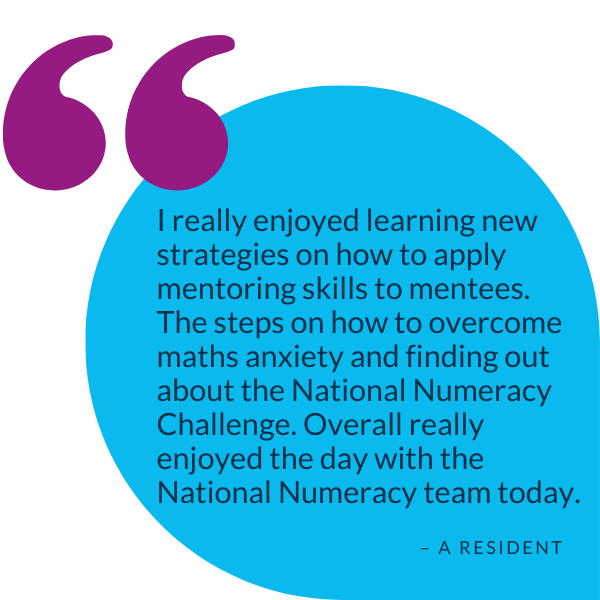
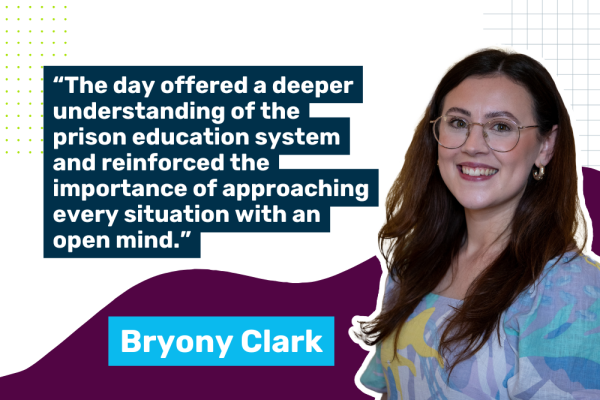
The feedback from both the inmates and prison staff was overwhelmingly positive, and it felt very much like a two-way learning experience. For me, the day offered a deeper understanding of the prison education system and reinforced the importance of approaching every situation, much like maths, with an open mind.