Jessica Gagen is an aerospace engineering graduate and former Miss England, Miss UK, and Miss Europe. She is the first engineer to win the title of Miss England. But her road to education wasn’t always smooth:
"Throughout school I'd been quite confident with maths, then I got to A Level and found myself at the bottom of the class. It really damaged my confidence. I struggled to put my hand up to ask for help because I was embarrassed. The easiest thing for me to do after the first year was to drop it, and I was advised to, which I was never expecting because maths was always one of my favourite subjects in school.
"After doing my A Levels, I took some time out. I worked in a supermarket, focused on my modelling career, then years down the line decided to go to university. I had to study physics for a year to get in because I dropped Maths at A Level. I found it hard, but used to reassure myself and think, ‘Everybody else that you're sat with is fresh out of college, they’ve learned all of this before and you haven't.’
"Then I got into my first problem class of my degree. I remember doing a question and feeling confident. Then I looked at two guys next to me – their answers were the same and mine was different. I asked one of them, ‘How come you've done it this way? I've done it this way, but I taught myself.’ And his response was, ‘If you don't know, you shouldn't be in this class.’
"I just burst into tears."
"I just burst into tears. It took me right back to where I was when I did my A Levels. I left the class, then thought, ‘You know what? It doesn't matter if it takes me 10 hours to understand what that person can understand in 10 minutes because we've all got our different strengths and weaknesses.’ That’s what took me through the whole of my university degree. The exam isn’t quizzing me on how long it took me to learn it, it’s whether it’s right or not.
"I now apply that prospect in all different avenues of my life. If something doesn't go to plan the first time, I think, ‘We are going to move forward and we're going to do this in our own way.’ We are all capable if we take things in our own stride, at our own pace."
Jessica’s story resonated with Chrissie Matthews, Adult Learning Support, CLD, Orkney Islands Council, who said:
"I've worked for in adult learning for 25 years, and to this day I have got numeracy anxiety – and I'm delivering it! There are certain things that just do not stay, and when I've got to deliver it, I have to go and refresh and acknowledge that’s just how I am.
"I share my anxieties with learners and it puts them at ease. I’ve got a colleague that just holds it in there and never forgets, and it does kind of make you feel like, 'Should I be doing this job?'
"I share my anxieties with learners and it puts them at ease."
"It was inspiring to hear Jessica – I could have cried. I went to 17 schools when I was growing up, and it shows you that when there's no consistency in education as a young person, the gaps become big and as you get older life gets in the way. It's important that I help my kids and grandkids and try and help other parents because everybody can do maths or numbers of some sort, but there will be gaps that need plugging."
Jasmin Cooper, Maths tutor for Adult Community Learning at Swindon Borough Council, also saw herself in Jessica’s story:
"Like Jess, I found maths fine at GCSE – I didn’t have to do any revision, I really lucked out. Then the switch to A Level became a real challenge and it just would not stick – it didn’t matter how many hours I was putting in.
"The best maths teachers are the ones that can't do the maths."
"I did stick at it because I enjoyed maths at that point, and went on to do a degree in primary teacher education. In one of our very first maths seminars, our lecturer at the time said that, generally speaking, the best maths teachers are the ones that can't do the maths.
"My maths assignments actually ended up becoming my highest scoring assessments, which was quite a nice turn around that I've kind of taken it from, 'I can do the maths' to 'Now I can teach the maths.'"
Want to help build confidence in your communities?
Here are some recommendations and experiences from our Numeracy Champions:
• Set up a numeracy trail through the local area, where participants answer a numeracy question at each landmark to score points and win prizes. It’s a great way to share the value of maths, while getting people together and building relationships where they can talk openly about numbers.
• Create crosswords and wordsearches with numeracy words hidden within.
• Host craft workshops – doing something creative can be a good way to show practical uses of numbers, while providing a safe and relaxed space to talk about maths.
• Run a photo competition where people submit a snap of them doing an everyday activity, while describing how it uses numbers – best photo wins a prize!
• Hold a “number confidence coffee morning” drop-in session, with mythbusters, games, and people to have a chat to.
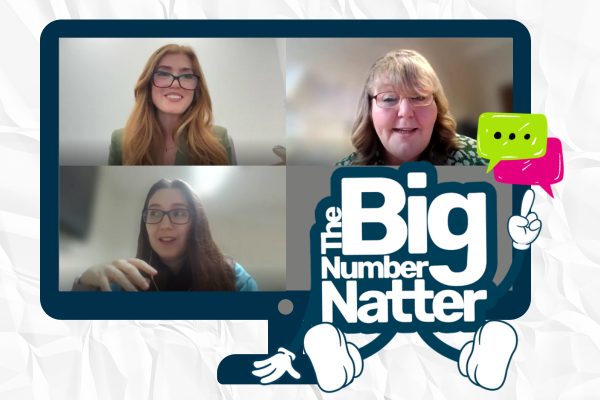
• Get your workplace involved: have a member of your senior leadership try the National Numeracy Challenge and share their experience, or hold a Number Natter in a team meeting!
• Share resources on social media or internal communications.